
Hilarious Paddleboarding Fails and What You Can Learn From Them
- WeTried.Shop

- Nov 18, 2025
- 4 min read
Updated: Nov 19, 2025
Paddleboarding looks easy and relaxing when you watch experts glide smoothly across the water. But for beginners, it often turns into a comedy of errors. From unexpected falls to awkward balance attempts, learning to paddleboard comes with plenty of funny fails. These moments might feel embarrassing at the time, but they offer valuable lessons that help you improve and enjoy the sport more.
This post shares some of the most common paddleboarding fails, why they happen, and how you can avoid them. Whether you’re just starting out or have tried paddleboarding a few times, understanding these mishaps will boost your confidence and keep your paddleboarding adventures fun and safe.
Why Paddleboarding Can Be Tricky at First
Paddleboarding requires balance, coordination, and a bit of strength. Unlike walking or running, standing on a floating board means your body constantly adjusts to the water’s movement. Beginners often underestimate how much their core and leg muscles need to work to stay upright.
Common challenges include:
Finding the right stance
Keeping your paddle strokes smooth and steady
Managing waves, wind, or currents
Getting back on the board after a fall
These challenges lead to many funny moments, especially when you’re still learning how your body and the board interact.
Classic Paddleboarding Fails and What They Teach You
1. The Wobbly Start
Many beginners step onto their paddleboard with excitement but little preparation. The board rocks side to side, and before you know it, you’re in the water. This fail happens because the feet aren’t placed properly or the body is too stiff.
Lesson:
Stand with your feet parallel and about shoulder-width apart, centered on the board. Keep your knees slightly bent and your body relaxed. This stance helps absorb the board’s movement and improves balance.
2. The Paddle Drop
It’s common to lose grip on the paddle, especially when trying to adjust your stance or turn. The paddle slips into the water, and you scramble to grab it before it floats away.
Lesson:
Hold the paddle firmly but not too tight. Practice switching hands smoothly and keep the paddle close to your body. Using a paddle leash can prevent losing your paddle in open water.
3. The Face-First Fall
This is the classic fail where you lose balance and fall forward into the water. It’s often caused by leaning too far forward or trying to paddle aggressively without stable footing.
Lesson:
Keep your weight centered and avoid leaning too far in any direction. Use slow, controlled paddle strokes and focus on maintaining balance before increasing speed.
4. The Backward Slide
Sometimes, beginners stand too far back on the board, causing the nose to lift and the tail to sink. This makes the board unstable and can lead to sliding backward or tipping over.
Lesson:
Position your feet near the center of the board, not too close to the edges or the back. This keeps the board level and easier to control.
5. The Clumsy Mount
Getting on the board from the water can be tricky. Many beginners try to climb on from the side, causing the board to tip over or spin.
Lesson:
Climb onto the board from the back or kneel first, then slowly stand up. Keep your weight low and centered during the transition.
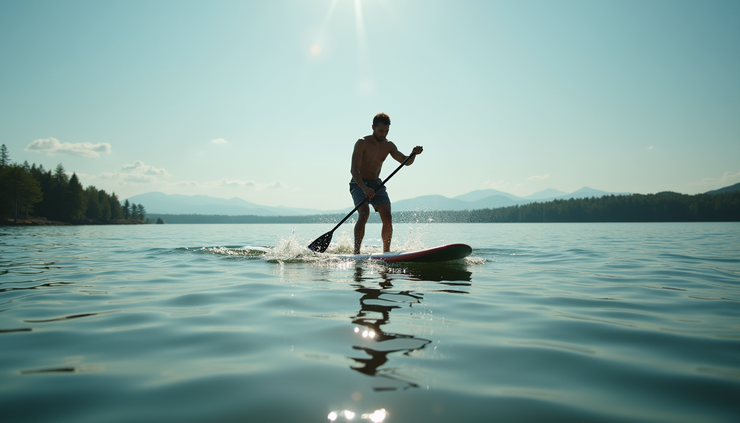
Falling into the water is part of learning to paddleboard. Staying relaxed helps you get back on quickly.
How to Turn Fails Into Progress
Every fall or mistake is a chance to learn. Here are some tips to make the most of your paddleboarding practice:
Stay relaxed: Tension makes balancing harder. Take deep breaths and enjoy the process.
Practice on calm water: Lakes or slow rivers are ideal for beginners. Avoid choppy seas until you’re more confident.
Use a beginner-friendly board: Wider and longer boards offer more stability.
Wear a life jacket: Safety first, especially when you’re still learning.
Take lessons: A coach can spot mistakes and give personalized advice.
Watch videos: Seeing others paddleboard helps you understand proper technique.
Funny Stories From Real Paddleboarders
Many paddleboarders have hilarious stories about their early days on the water. Here are a few examples:
One beginner tried to impress friends by standing up immediately after stepping on the board. The board wobbled, and they ended up doing a full somersault into the water. Everyone laughed, and the paddler learned to take it slow.
Another paddler lost their paddle while trying to turn quickly. They had to swim after it, only to find a curious duck had taken an interest in the floating paddle.
A group of friends tried paddleboard yoga but ended up in the water more than on the board. Their laughter made the experience unforgettable, and they improved their balance over time.
These stories show that paddleboarding is as much about having fun as it is about skill.
Tips to Avoid Common Paddleboarding Mistakes
Check your equipment: Make sure your board and paddle fit your size and skill level.
Warm up: Stretch your legs, arms, and core before getting on the water.
Start kneeling: Begin on your knees to get a feel for the board before standing.
Look ahead: Keep your eyes on the horizon, not your feet. This helps with balance.
Use your core: Engage your abdominal muscles to stabilize your body.
Paddle on both sides: Alternate sides to keep your board moving straight.
Building Confidence on the Water
Confidence grows with practice and patience. Each time you paddle, you build muscle memory and improve your balance. Remember that even experienced paddleboarders fall sometimes. The key is to get back on the board and keep going.
Celebrate small wins like standing for longer periods or making smooth turns. Over time, those wins add up to a rewarding paddleboarding experience.



Comments